Pad Kra Pao in 15 Minutes: Unraveling the Holy Basil vs. Thai Basil Mystery
In the vibrant tapestry of Thai cuisine, few dishes capture the hearts and palates of food lovers quite like Pad Kra Pao. This iconic stir-fry, often hailed as a quintessential street food and a staple in Thai homes, promises an explosion of savory, spicy, and aromatic flavors – all achievable in a remarkable 15 minutes. Its speed and unparalleled taste make it a perfect candidate for a quick weeknight meal, delivering restaurant-quality satisfaction right from your kitchen.
But beyond its dazzling speed and deliciousness lies a crucial element that often sparks lively debate among culinary enthusiasts: the basil. While many Western adaptations of "Thai basil stir-fry" utilize what's commonly found in Asian markets, the true essence of Pad Kra Pao, literally translating to "holy basil stir-fry," hinges on a specific, somewhat elusive herb. This article will not only guide you through crafting this lightning-fast dish but also delve deep into the heart of the basil debate, illuminating why the choice of herb is paramount to an authentic experience.
The Great Basil Debate: Holy Basil vs. Thai Basil
For many, the term "Thai basil" conjures images of vibrant green leaves with purple stems, emitting a distinctly anise-like or licorice-like aroma. This is the variety often labeled as Thai basil in Western supermarkets and frequently used in popular Thai dishes like pho or various stir-fries. Botanically, this is often a variety of cinnamon basil or sweet basil, specifically Ocimum basilicum var. 'Thyrsiflora'.
However, when it comes to an authentic Pad Kra Pao, there's another basil in town, one that purists consider non-negotiable: Holy Basil. Known as kra pao in Thai (Ocimum tenuiflorum or Ocimum sanctum), this herb boasts a distinctly different profile. Its leaves are often smaller, slightly hairier, and can range from green to purplish. But it's the flavor that truly sets it apart.
While Thai basil offers sweet, anise notes, holy basil presents a more complex, peppery, almost clove-like or even slightly medicinal and earthy flavor, with subtle hints of licorice or fennel. It has a robust, pungent quality that stands up beautifully to the intense flavors of garlic, chilies, and savory sauces in a stir-fry, contributing a unique aromatic depth that cannot be replicated.
The passion surrounding holy basil isn't merely about tradition; it's about flavor integrity. The absence of holy basil fundamentally alters the dish, transforming it from an authentic Pad Kra Pao into a delicious "Thai-style basil stir-fry." While perfectly enjoyable, it's not quite the same dish that graces the bustling streets of Bangkok.
Why Holy Basil Is Key to Authentic Pad Kra Pao Flavor
Many home cooks and even some restaurant chefs in the West opt for readily available Thai basil due to holy basil's elusiveness. For a long time, finding fresh holy basil outside of Southeast Asia required a dedicated hunt through specialized markets or, as many ardent fans discovered, growing it themselves. The journey of cultivating holy basil from seeds, witnessing its growth, and finally tasting its unique peppery zest for the first time is often described as an epiphany, a moment where the true distinction of the ingredient becomes undeniably clear.
When holy basil hits the hot wok, its volatile oils release an incredibly aromatic steam that permeates every element of the dish. It doesn't just add a background note; it becomes an active participant in the flavor symphony, balancing the heat from the chilies, the richness of the protein, and the savory depth of the sauces. Without it, the dish, while still tasty, lacks that signature, almost indefinable "funk" and aromatic complexity that defines authentic Pad Kra Pao. If you're curious to dive deeper into this topic, explore Why Holy Basil Is Key to Authentic Pad Kra Pao Flavor for more insights.
For those committed to culinary authenticity, the effort to source or grow holy basil is profoundly rewarding. It's the ingredient that truly elevates a simple stir-fry into an unforgettable culinary experience, transporting your taste buds directly to the heart of Thailand.
Crafting Your 15-Minute Pad Kra Pao: The Essential Steps
The beauty of Pad Kra Pao lies not just in its flavor but also in its incredible speed. With minimal prep and a screaming hot wok, you can have this dish on the table in about a quarter of an hour. Here's how to master the technique:
- Aromatics First: Start by pounding fresh garlic and fiery chilies (like bird's eye chilies) into a rough paste using a mortar and pestle. If you don't have one, finely mince them. Some recipes also include shallots for an extra layer of sweetness. Heat a generous amount of oil in your wok or a large skillet over medium-high heat. Add your aromatic paste and fry for about 1-2 minutes until fragrant, being careful not to burn the garlic.
- Introduce the Protein: Crank the heat to high. Add your ground pork (or chicken, beef, or even plant-based alternatives like tofu or mushrooms). Break it up vigorously with your spatula, allowing it to sear and crisp up in spots. This browning adds immense flavor.
- The Sauce Symphony: While the protein cooks, quickly whisk together your sauce ingredients: fish sauce, light/thin soy sauce, dark soy sauce (for color and depth), oyster sauce, and a pinch of sugar. Once the pork is mostly cooked through, pour the sauce directly into the wok. Stir-fry for another minute, allowing the sauce to coat the meat and reduce slightly. A splash of broth or water can be added to deglaze the pan and create a little extra sauce if needed – it should evaporate quickly given the high heat.
- The Holy Basil Finale: This is the moment for your star ingredient. Add a generous handful (or two!) of fresh holy basil leaves to the wok. Stir-fry vigorously for just 30-60 seconds, or until the leaves wilt. The goal is to infuse their unique aroma without overcooking them.
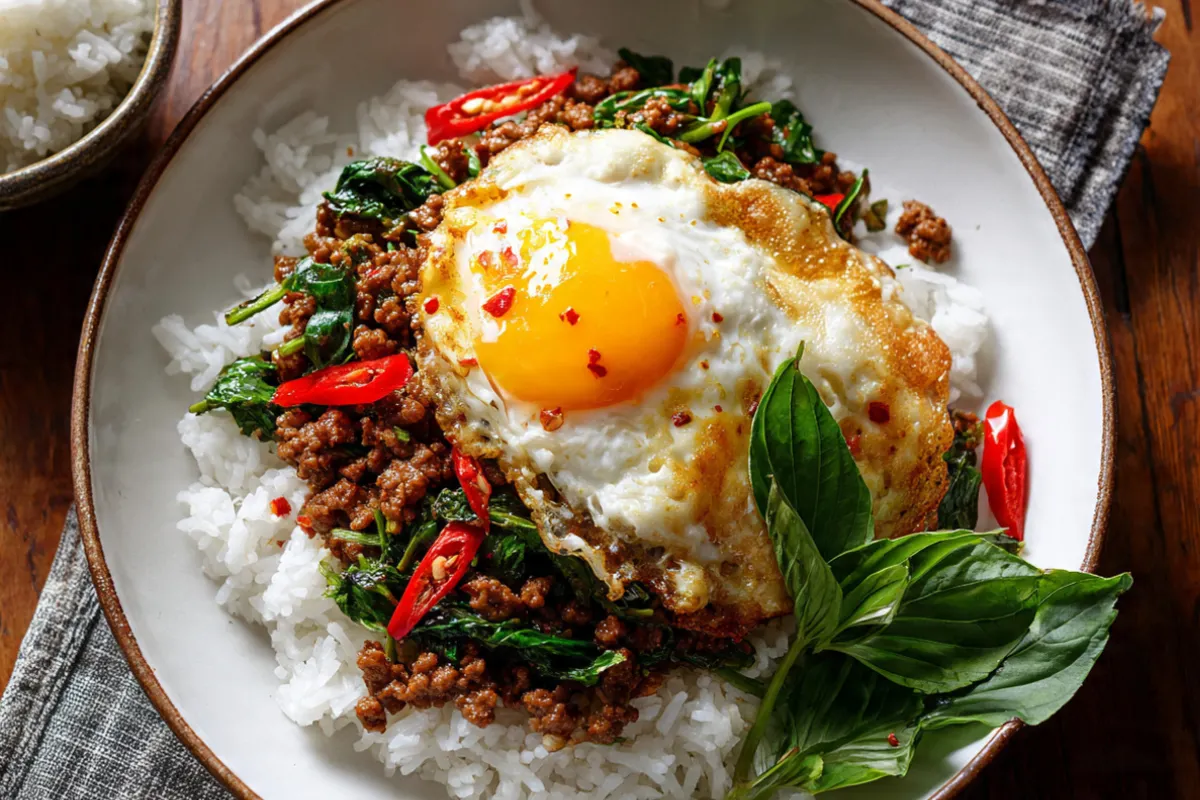
- Serve Immediately: Transfer your glorious Pad Kra Pao over a bed of fluffy jasmine rice. For the ultimate experience, top it with a perfectly fried egg with a crispy edge and a runny yolk, allowing its richness to mingle with the spicy stir-fry.
Tips for the Perfect Pad Kra Pao Experience
- Mise en Place is King: To truly achieve that 15-minute mark, have all your ingredients prepped and ready to go before you even turn on the stove. This includes pounding your aromatics, mixing your sauce, and picking your basil leaves.
- High Heat is Crucial: A wok or heavy-bottomed skillet over high heat is essential for a proper stir-fry. This ensures rapid cooking, caramelization, and prevents the ingredients from steaming.
- Spice Level Your Way: Bird's eye chilies pack a punch! Adjust the quantity to suit your heat tolerance. For a milder dish, remove the seeds.
- The Runny Egg Magic: Don't skip the fried egg. The rich, runny yolk acts as a natural sauce, mellowing the spice and adding an incredible layer of creamy deliciousness. Some also like to prepare a simple "nam pla prik" (fish sauce with sliced chilies and lime) to drizzle over the egg.
- Beyond Pork: While ground pork is traditional, feel free to experiment with ground chicken, sliced beef, shrimp, or even vegetarian options like minced mushrooms or firm tofu for a delicious variation.
- Sourcing Holy Basil: If local markets fail you, consider growing your own! Seeds are readily available online, and holy basil thrives in warm climates. For comprehensive guidance on finding and utilizing this star ingredient, check out The Holy Basil Hunt: How to Make Real Pad Kra Pao at Home.
Conclusion
Pad Kra Pao is more than just a quick meal; it's a testament to the power of fresh ingredients and bold flavors coming together in perfect harmony. While the journey to finding authentic holy basil might add an extra layer to your culinary adventure, the reward is an unparalleled aromatic depth that truly defines this beloved Thai dish. Whether you're a seasoned cook or a kitchen novice, embracing the subtle nuances, particularly the basil choice, will unlock a world of authentic Thai taste in your own home, proving that a truly magnificent meal can indeed be made in just 15 minutes.
